“There Are No Two Identical Ambers” – a Conversation with Amber Experts
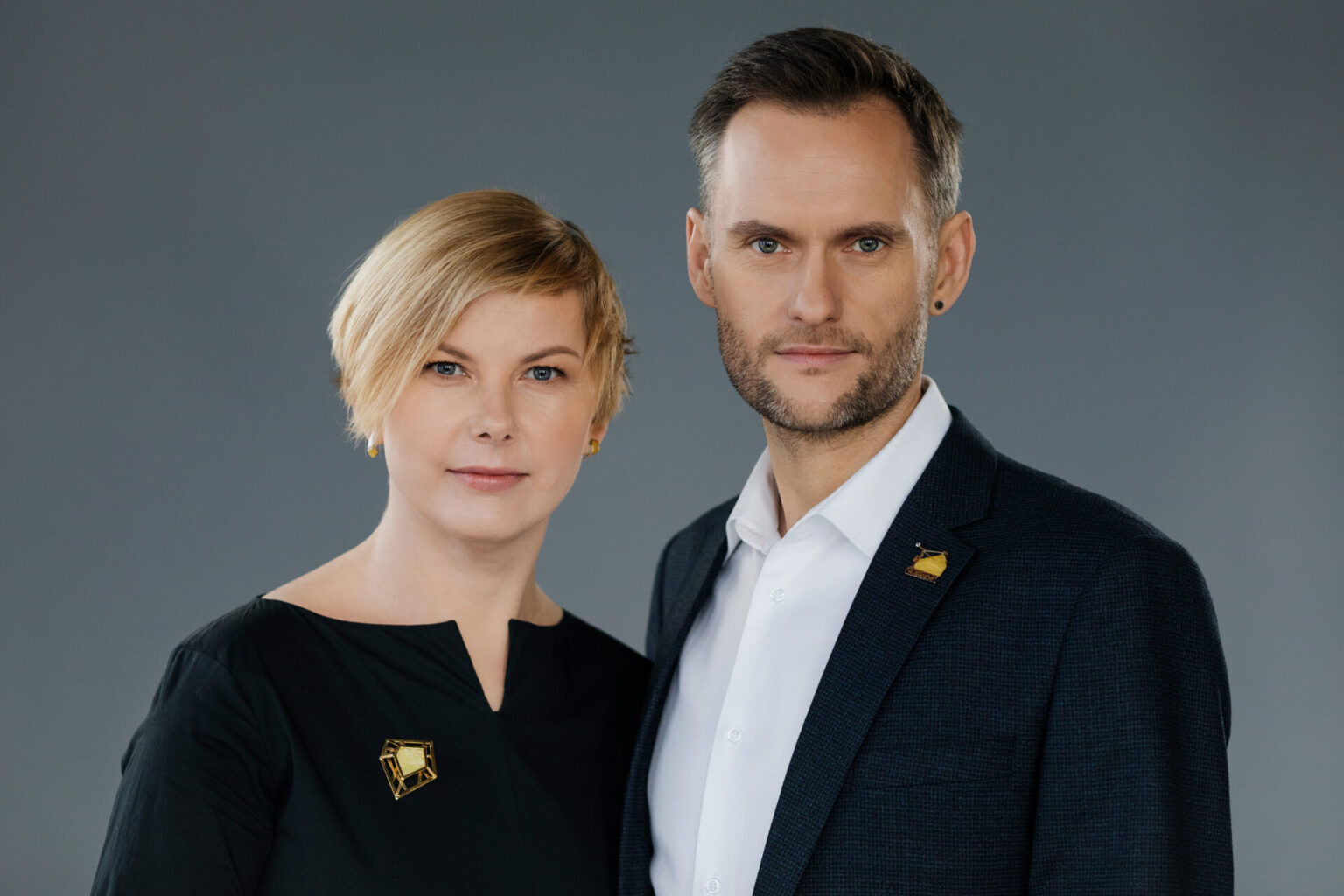
Amber has long been an integral part of jewelry culture in my native Poland, yet its popularity is reaching ever farther. Fascinating stories about lumps of resin that are tens of millions of years old ignite the imagination of both enthusiasts and creators. Agnieszka Klikowicz-Kosior and Michał Kosior—the duo behind Amber Experts—are specialists and researchers devoted to the “gold of the Baltic.” They run a laboratory, conduct training sessions, and provide professional valuations. If you want to learn about amber, they are the people to learn from. I invite you to read our conversation about works of art created by nature and time.
–
Fabulous colors, unusual structures, inclusions—just how diverse can amber be?
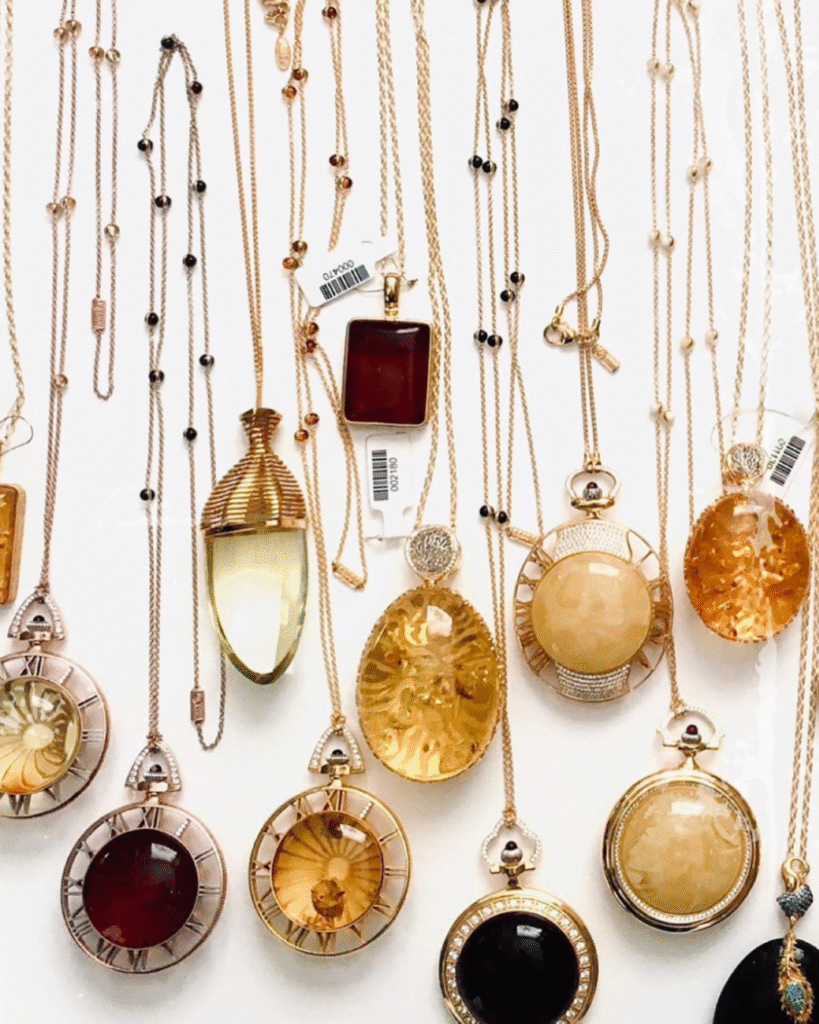
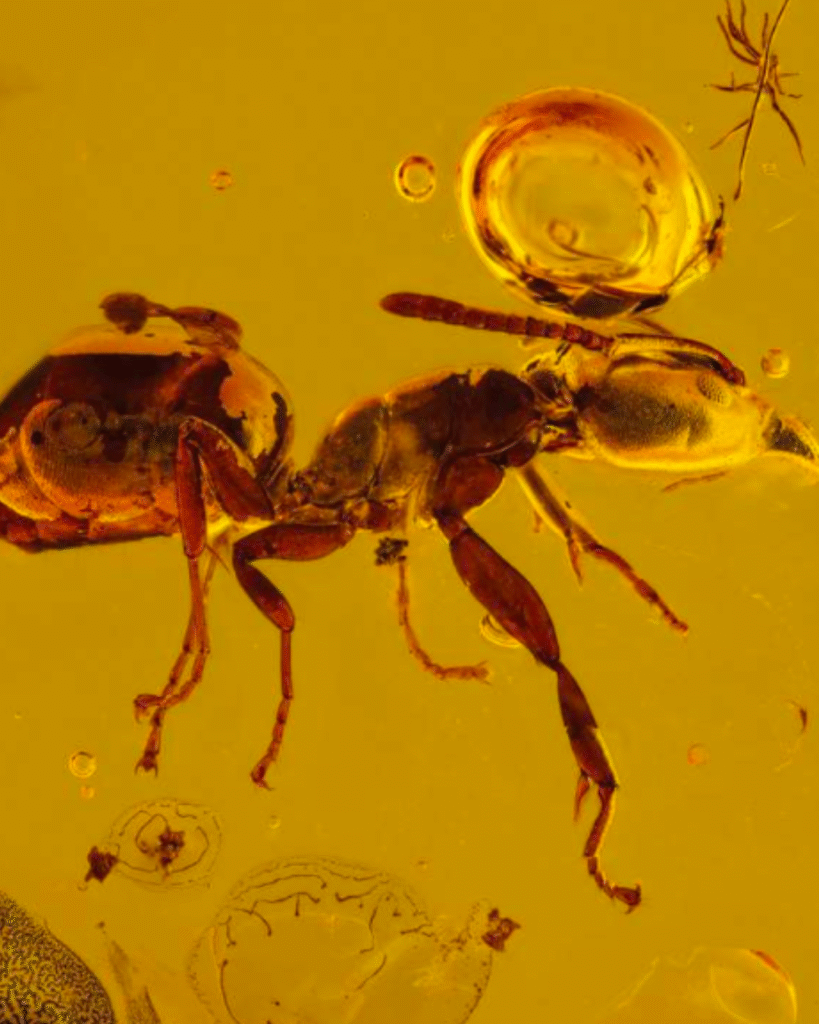
Baltic amber can be full of surprises—its color, especially when only after polishing do we discover what lies beneath the surface, as well as its shape and texture, which are never accidental. Its palette is extraordinarily varied: from milky white, through warm shades of yellow and honey, to deep cherry and almost black. The blending of hues and varying levels of transparency, resulting from the internal structure of amber, creates fascinating optical effects—often resembling ready-made, natural artistic compositions. There are also pieces with spectacular plant or animal inclusions dating back millions of years. Every piece is unique—there are no two identical ambers. In a sense, it is a natural work of art created by time.
Where is most of this “golden stone” mined today? Is Poland an amber powerhouse, and is Gdańsk the amber capital?
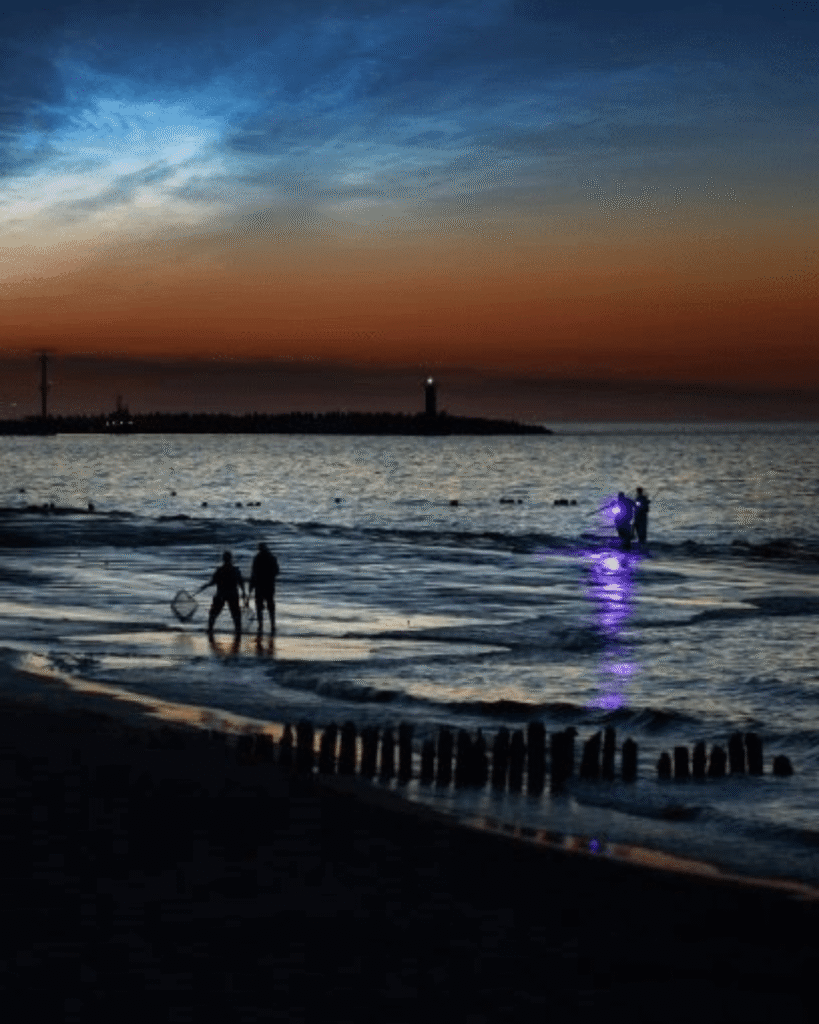
The largest documented deposits of Baltic amber are located in the Sambian Peninsula region in the Kaliningrad Oblast. For decades, this is where the largest industrial amber mines have operated (the Amber Combine in Yantarny). Amber deposits are also found in Poland—among others in Pomerania and in the Lublin region, where in recent years mines extracting amber from Miocene sediments have been launched. Although Poland is not the largest producer in terms of mining volume, it plays a very important role in the processing and design of amber jewelry. Gdańsk, meanwhile, has been regarded for centuries as the world capital of amber. This is where the community of master amber artisans, designers, and industry institutions is concentrated. So while the raw material is extracted in various parts of the Baltic region, the culture of its craftsmanship has its heart in Gdańsk—much like Antwerp is the capital of diamonds, even though they are not mined there.

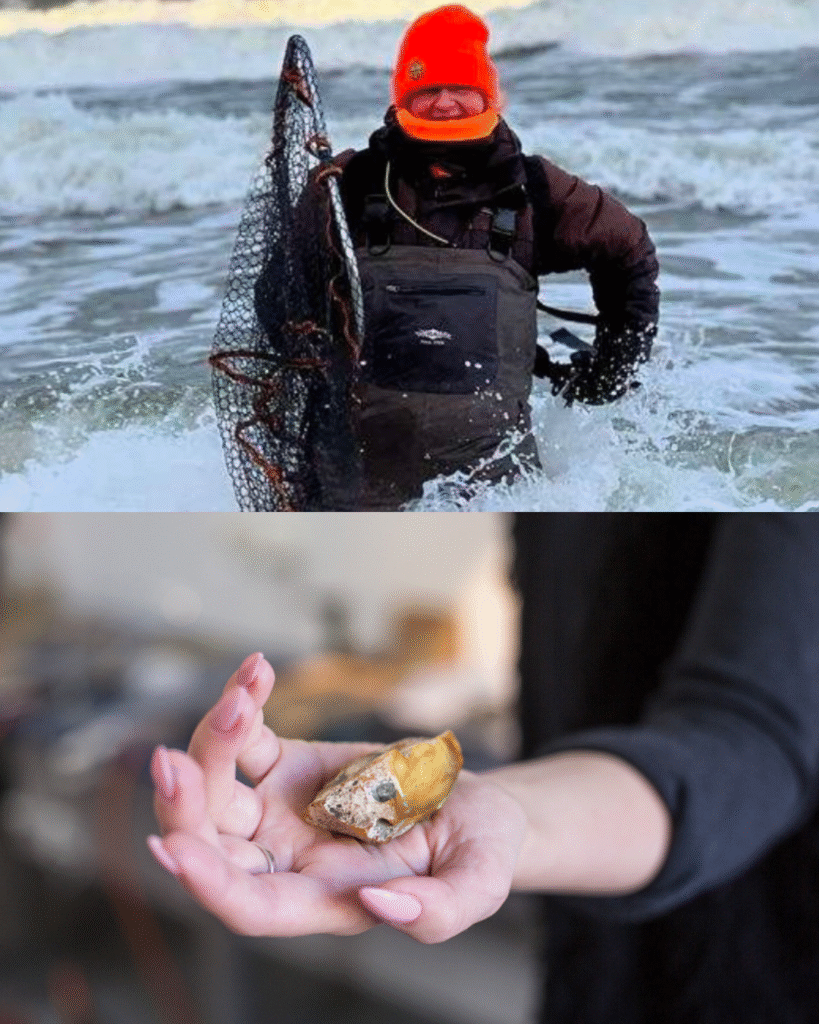
Is amber gaining an international career? Where in the world does it currently have the most admirers?
Today, Baltic amber is a material with global reach. It is particularly popular in China, where it is perceived as a symbol of luck, protection, and prestige. Arab countries are also a strong market, where amber is valued for its natural character and authenticity, as well as for the long tradition of collecting amber objects. In Arab cultures it is typically associated with men. Baltic amber was widely used in the collections of Europe’s leading jewelry houses until World War II, but shifting borders cut French and British companies off from access to the raw material. Amber jewelry from past eras is also attracting growing interest. Historical pieces, especially those from the 19th and early 20th centuries, are now sought after as collectors’ objects and as testimonies to historic jewelry-making techniques.
An increasingly interesting phenomenon is amber’s return to the collections of contemporary designers. It appears in modern, minimalist forms, reinterpreted in ways very different from traditional amber jewelry. If this trend continues, amber has a real chance to reappear in fashion collections in Europe and the United States.
Is there a place for amber in the world of luxury? Do you see interest from designers and, on the other hand, from affluent clients in exclusive amber jewelry?
Definitely. Today, luxury does not simply mean a high price—it is more about rarity, quality, authenticity, and limited availability. In this sense, amber fits perfectly into the premium segment. It is an organic material around 40 million years old, unique and impossible to reproduce, which is why it is increasingly perceived as a collectible material. At the same time, as one of the few biogenic materials, it does not require harvesting from living species, unlike pearls or coral. Interest from designers around the world is slowly growing, although it could certainly be much greater. Amber remains relatively little known outside Central Europe. The market also faces a shortage of knowledge—both about amber’s properties and about the possibilities of working with it and using it in contemporary jewelry. The traditional approach of shaping beads from many small pieces could be contrasted with the Arabic approach to creating a premium product with distinctive and consistent pattern and color—cutting a large piece into elements for a single necklace. This may be one way to convince clients of the value of amber as both a luxurious and high-end material.
What are the most exceptional pieces of amber you have encountered?
The most exciting pieces are those with perfectly preserved inclusions, especially when accompanied by an interesting story of discovery—sometimes entirely accidental, for example during processing. This was the case with a piece in which, while polishing in a workshop, as many as 20 ants were discovered. Later research showed that one of them was… a slave. There are also entirely different kinds of “records.” In our laboratory we once dealt with a piece of amber weighing more than 10 kilograms—unfortunately found in several pieces. However, there was no doubt that they originally formed a single whole.